Curator's Take
AI Commentary
This article highlights the growing shift from binary qubits to higher‑dimensional qudits, a move that can pack more information per particle and potentially cut circuit depth for many algorithms. By demonstrating hardware‑compatible control of three‑level (and beyond) systems, Blok’s Rochester team builds on recent trapped‑ion and superconducting qutrit experiments, showing how native multi‑level operations could improve error‑correction overheads and quantum‑chemistry simulations. The work underscores both the promise of richer Hilbert spaces and the practical challenge of calibrating more complex gate sets, a balance that will shape next‑generation quantum processors.
— Mark Eatherly
Summary
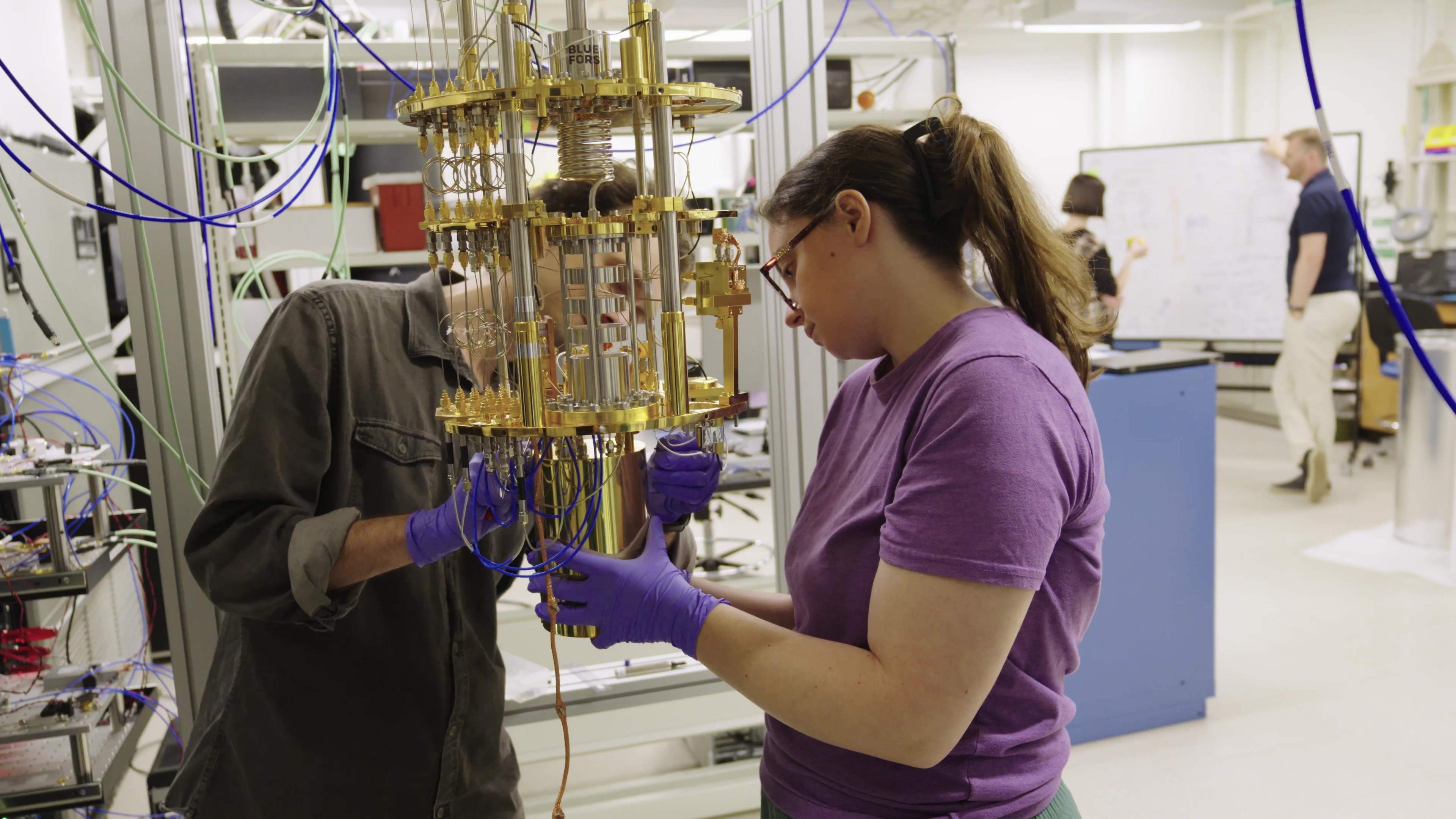
Quantum computing is often talked about in terms of qubits, the quantum equivalent of a classical binary bit. But what if the most efficient way to process quantum information is not always binary? At the University of Rochester, Associate Professor of Physics Machiel Blok and his research group are exploring that question through work on […]