Curator's Take
AI Commentary
This article matters because microwave crosstalk has long limited the scalability of superconducting qubit arrays, and Chalmers’ parasitic‑capacitance engineering offers a hardware‑level fix that does not rely on additional control circuitry. By deliberately shaping on‑chip capacitances to create destructive interference, the team aligns classical crosstalk nulls with quantum ZZ interaction nulls—a synergy that complements recent advances in floating transmon designs and error‑mitigation protocols. If the approach proves robust across larger chips, it could simplify wiring layouts and reduce calibration overhead for near‑term processors, though its effectiveness will need validation on multi‑qubit devices beyond the demonstrated prototypes.
— Mark Eatherly
Summary
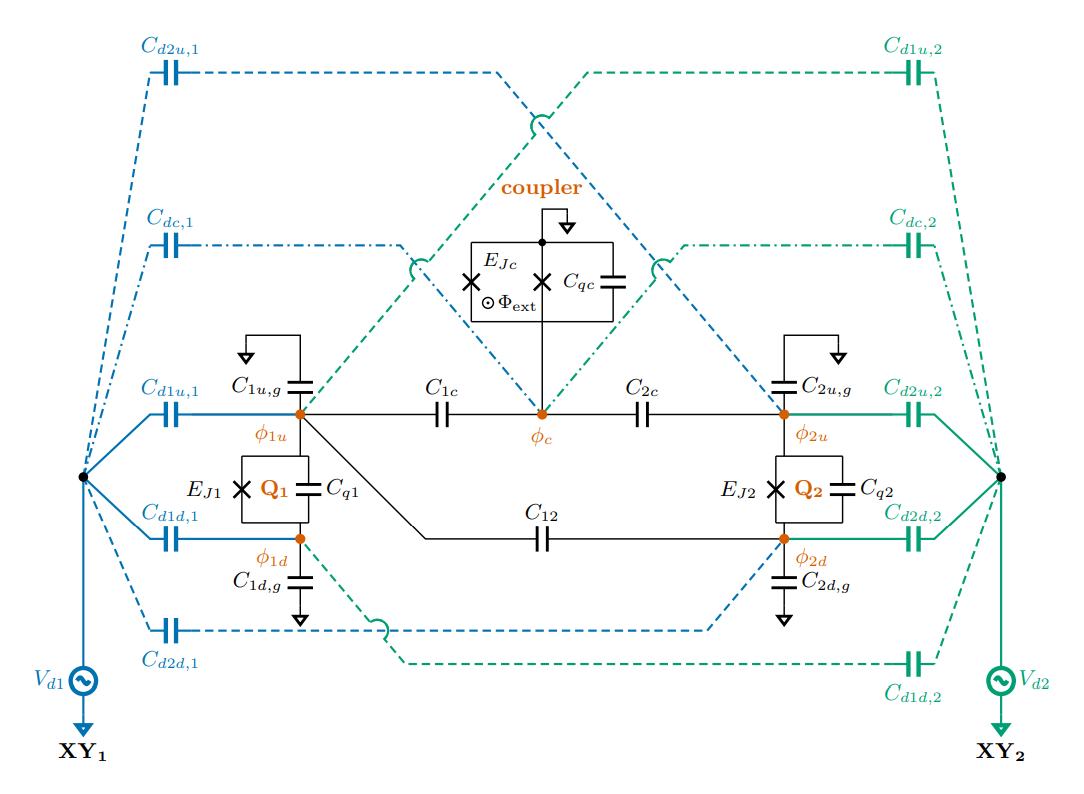
Physicists at Chalmers University of Technology have developed a new method to eliminate microwave crosstalk in superconducting processors. Their research shows that by engineering on-chip parasitic capacitances, they can achieve destructive interference among parasitic capacitive channels, suppressing unwanted qubit excitations. This method offers a practical advantage for floating transmons and allows for alignment of classical microwave crosstalk nulls with quantum ZZ nulls. The post Chalmers University Demonstrates Hardware-Level Microwave Crosstalk Suppression via Parasitic Capacitance Engineering appeared first on Quantum Computing Report .