Curator's Take
This collaboration between Qruise and Goethe University represents a significant step toward making nitrogen-vacancy centers more practically viable for quantum computing applications. NV centers in diamond have long been promising for quantum sensing and computing due to their room-temperature operation, but they've historically suffered from control and coherence challenges that have limited their scalability. Qruise's automated bring-up and simulation capabilities could help solve the notorious difficulty of reliably initializing and operating these systems, potentially unlocking their advantages for quantum sensing networks and distributed quantum computing architectures. The partnership underscores the growing recognition that sophisticated control software will be just as crucial as hardware advances in making exotic quantum systems commercially viable.
— Mark Eatherly
Summary
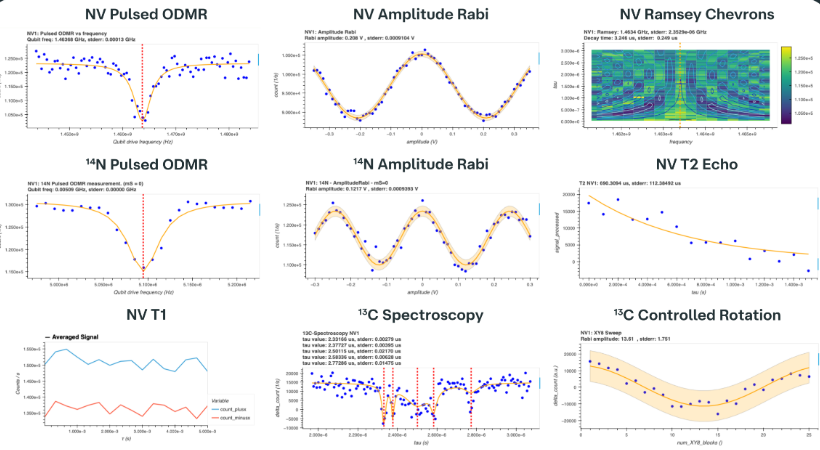
PRESS RELEASE — Saarbrücken and Frankfurt, Germany | Monday March 23rd, 2026 – Following its ambition to become completely hardware agnostic, Qruise is working with XeedQ and the Modular Supercomputing and Quantum Computing (MSQC) group at Goethe University Frankfurt to enable reliable operation of nitrogen-vacancy (NV) centre quantum systems. As part of this, Qruise has demonstrated automated bring-up, simulation, and […]