Curator's Take
AI Commentary
This article shows that a commercial CMOS platform can reliably move individual electrons across a superfluid‑helium surface in two dimensions, providing the first experimental proof‑of‑concept for all‑to‑all qubit routing on this ultra‑clean qubit medium. By marrying well‑established silicon control electronics with helium‑based electron spin qubits, EeroQ bridges the gap between exotic quantum hardware and scalable manufacturing pipelines that have driven progress in superconducting and semiconductor qubits. The result could dramatically simplify wiring overhead and enable flexible connectivity for large‑scale processors, though further work is needed to demonstrate high‑fidelity shuttling and integration with full gate operations. Readers should watch how this hybrid approach may accelerate the race toward practical quantum architectures that combine low‑error qubits with industry‑standard control tech.
— Mark Eatherly
Summary
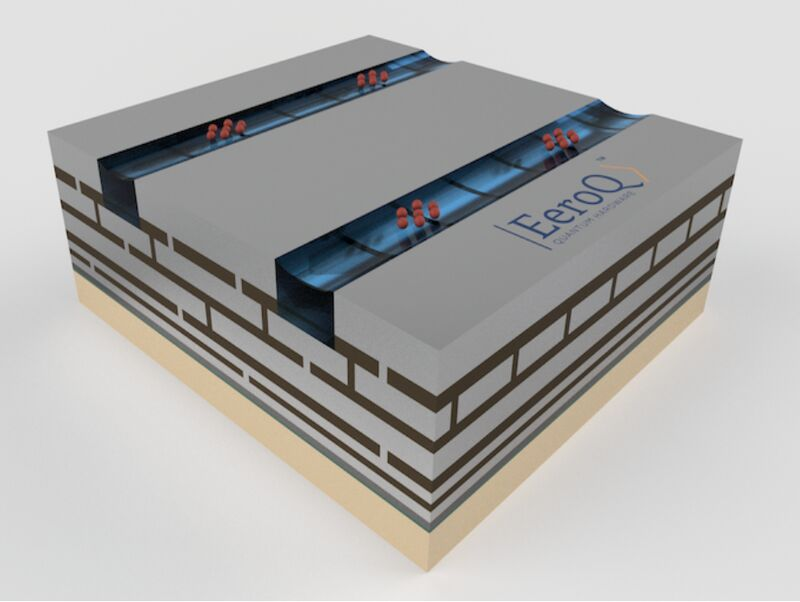
Schematic rendering of EeroQ’s Wonder Lake chip stack. Quantum hardware developer EeroQ has published peer-reviewed experimental results demonstrating the selective, two-dimensional transport of electrons on superfluid helium using a commercial silicon control architecture. Published in Physical Review Applied ("Selective shuttling of electrons on helium using a CMOS control platform"), the research validates the structural integrity [...] The post EeroQ Validates CMOS-Controlled Electron Shuttling on Superfluid Helium for All-to-All Qubit Routing appeared first on Quantum Computing Report .