Curator's Take
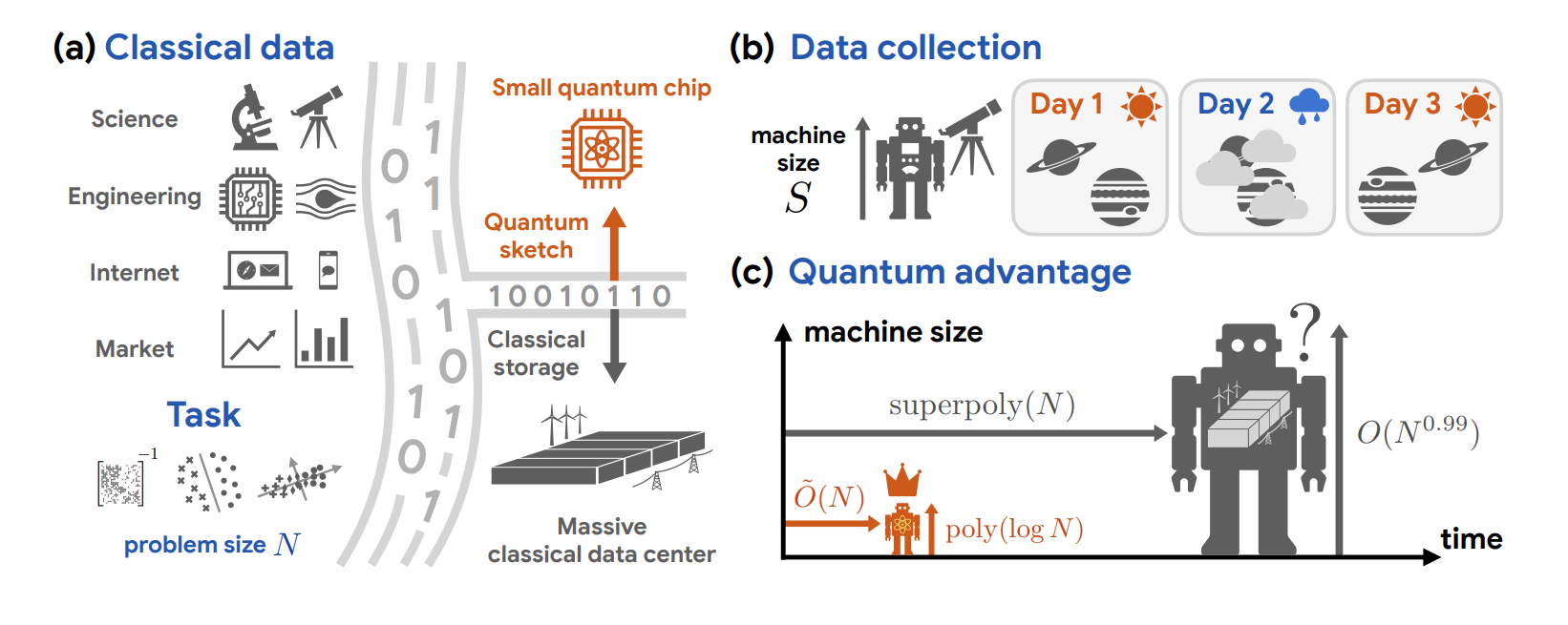
This research tackles one of quantum computing's most fundamental bottlenecks: how to efficiently load and process massive amounts of classical data on quantum systems without negating quantum advantages. The collaboration between Caltech, Google Quantum AI, MIT, and Oratomic demonstrates an exponential space advantage, suggesting that quantum computers could process certain classical datasets using exponentially less memory than classical computers require. This breakthrough addresses the notorious "data loading problem" that has long plagued practical quantum algorithm implementations, potentially opening new pathways for quantum computers to handle real-world big data challenges where memory constraints are critical. While the work appears theoretical at this stage, it represents a crucial step toward making quantum computers practical for data-intensive applications beyond cryptography and simulation.
— Mark Eatherly
Summary
Overview of quantum advantage in processing massive classical data. Researchers from Caltech, Google Quantum AI, MIT, and Oratomic have published a technical paper demonstrating an exponential space advantage for quantum computers in processing classical data. The research, titled "Exponential quantum advantage in processing massive classical data," addresses the "data loading problem"—the historical difficulty of accessing [...] The post Exponential Quantum Advantage in Processing Massive Classical Data appeared first on Quantum Computing Report .