Curator's Take
AI Commentary
This article showcases a new “R2D” pulse‑shaping technique that pushes single‑qubit gate times down to 6.8 ns while still exceeding 99.98 % fidelity, a combination rarely achieved on superconducting transmons and one that directly tackles the speed‑versus‑leakage trade‑off that has limited previous hardware generations. By suppressing multi‑photon leakage, the work narrows the gap between gate performance and the error thresholds required for fault‑tolerant surface‑code operations, complementing recent advances in microwave‑driven two‑qubit gates and cryogenic control electronics. The results are promising for scaling up quantum processors, but extending the method to multi‑qubit entangling operations will be the next critical hurdle.
— Mark Eatherly
Summary
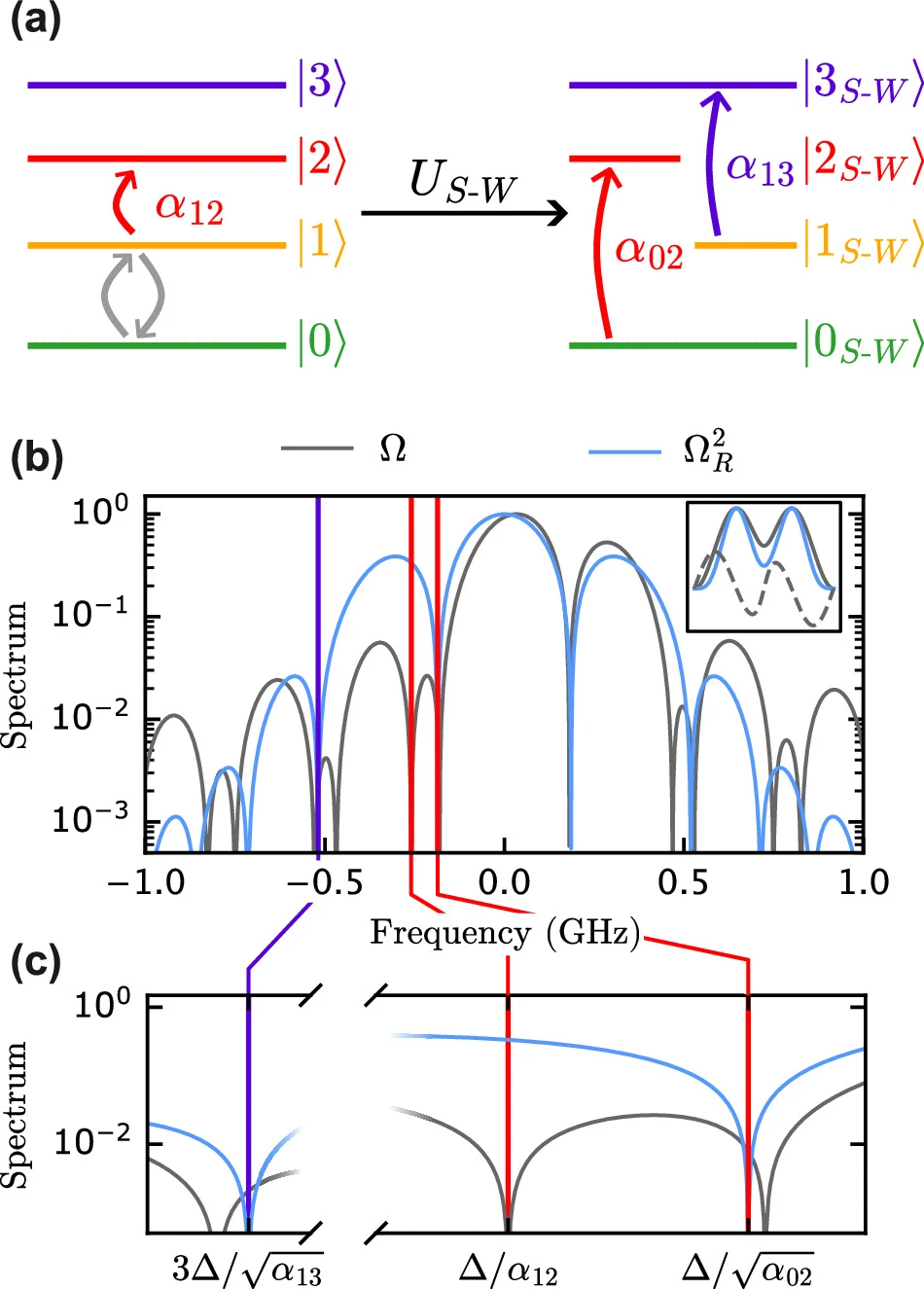
Physicists at Forschungszentrum Jülich, RWTH Aachen University, and the University of Cologne have achieved record-breaking 6.8-nanosecond single-qubit gate operations with over 99.98% fidelity on a superconducting transmon processor. Their "R2D" pulse-shaping method effectively suppresses multi-photon leakage, allowing for ultrafast gates while maintaining high fidelity. This advancement, detailed in Nature Communications, marks a significant step in quantum computing, though scaling to multi-qubit systems presents future challenges. The post Forschungszentrum Jülich Demonstrates 6.8-Nanosecond Single-Qubit Gates with > 99.98% Fidelity via Multi-Photon Leakage Suppression appeared first on Quantum Computing Report .