Curator's Take
AI Commentary
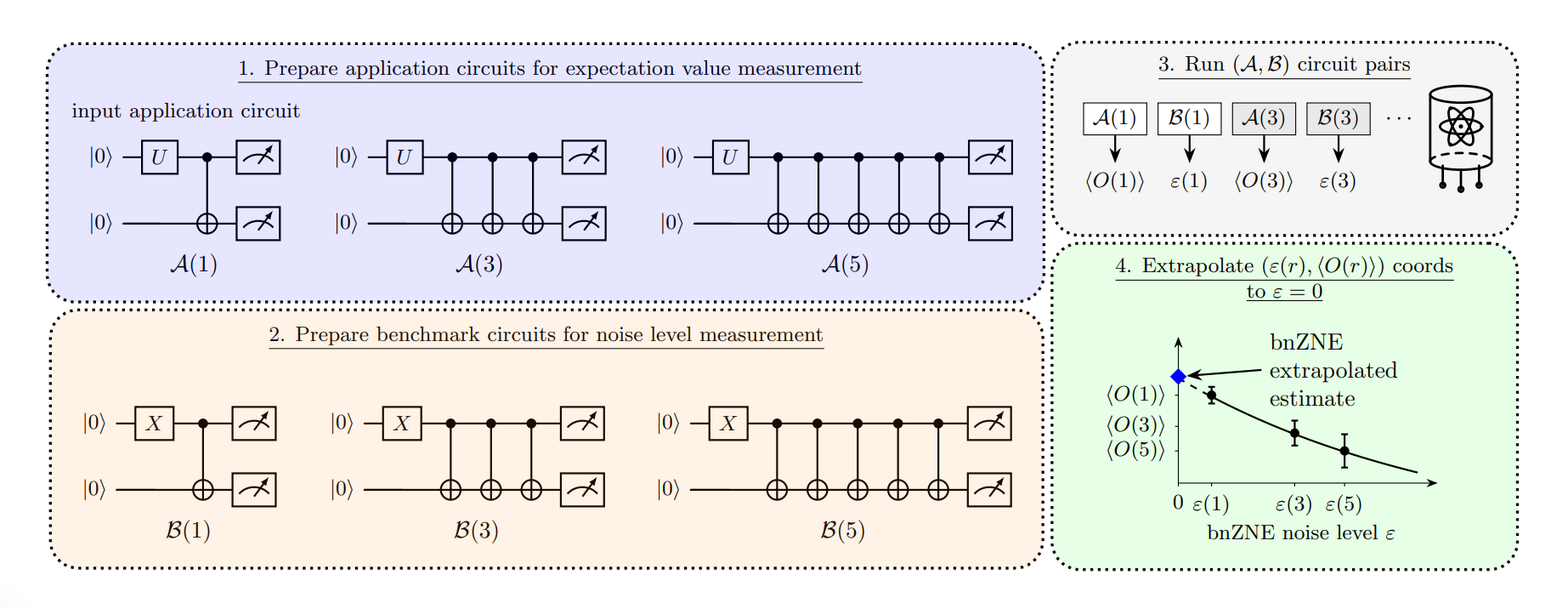
This article shows that the German Aerospace Center has turned error mitigation into a truly scalable tool by combining randomized benchmarking with zero‑noise extrapolation, Pauli twirling, dynamical decoupling and TREX to improve expectation‑value accuracy without adding extra measurement shots. Demonstrating the technique on 100‑qubit IBM and IQM devices proves it works at the scale where many near‑term applications—such as quantum chemistry or optimization—are beginning to run, addressing a long‑standing bottleneck of noisy intermediate‑scale quantum (NISQ) hardware. By keeping the overhead low, bnZNE could become the default “software‑only” fix for developers seeking higher fidelity results before full error correction arrives, though its performance will still depend on device‑specific noise characteristics and calibration stability.
— Mark Eatherly
Summary
Researchers at the German Aerospace Center (DLR) have developed an improved quantum error mitigation protocol, randomized benchmarked-noise zero-noise extrapolation (bnZNE). This method enhances expectation-value accuracy without increasing measurement shot budgets, validated on 100-qubit IBM and IQM processors. The bnZNE protocol incorporates Pauli twirling, dynamical decoupling, and twirled readout error extinction (TREX), outperforming standard zero-noise extrapolation across various benchmarks. The post German Aerospace Center (DLR) Researchers Demonstrate Low-Cost Benchmarked-Noise Error Mitigation Across 100-Qubit IBM and IQM Processors appeared first on Quantum Computing Report .