Curator's Take
This development represents a significant step toward making quantum algorithms practically viable on near-term hardware by leveraging classical GPU acceleration to handle the computational bottlenecks that plague quantum chemistry simulations. OTI Lumionics' work addresses a critical challenge in quantum computing: the exponential scaling of quantum circuit simulations that often makes classical preprocessing and optimization prohibitively expensive. By offloading the most computationally intensive parts of the Iterative Qubit Coupled Cluster algorithm to NVIDIA's latest Blackwell GPUs, they're creating a hybrid classical-quantum workflow that could make molecular simulation more accessible to researchers who don't have access to large quantum computers. This approach demonstrates how the quantum advantage might emerge gradually through clever combinations of classical and quantum resources, rather than requiring fault-tolerant quantum computers to see practical benefits in computational chemistry.
— Mark Eatherly
Summary
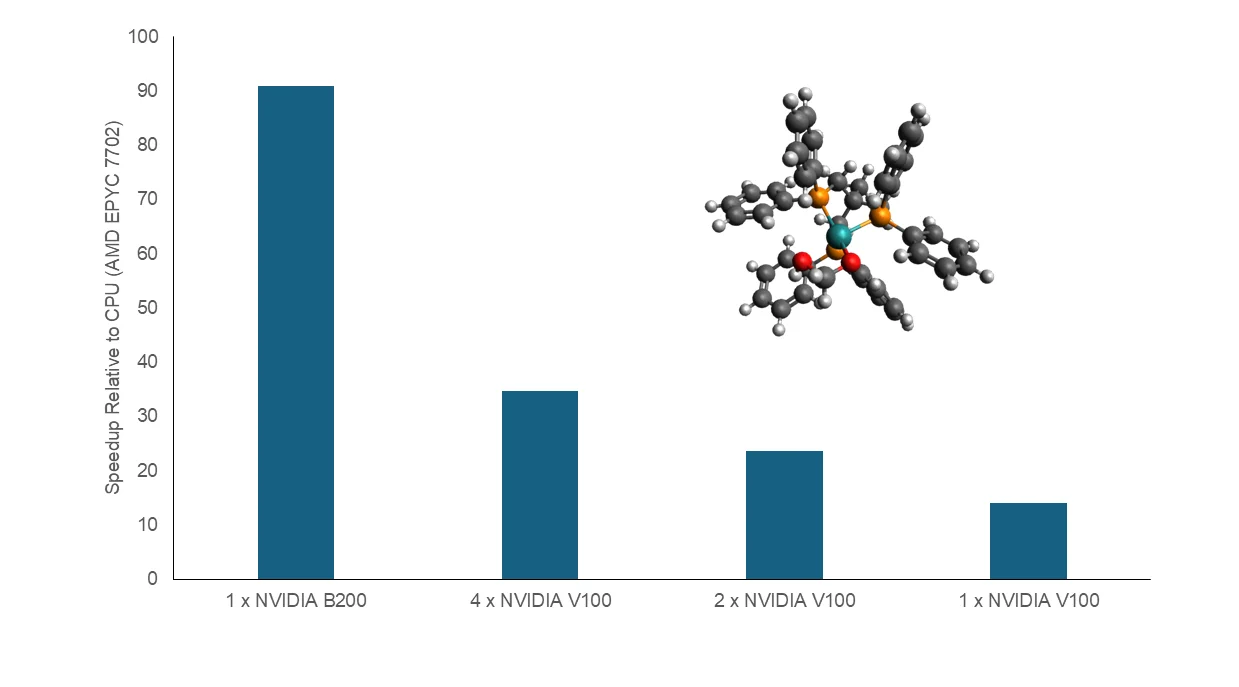
OTI Lumionics developed a parallel, GPU-accelerated implementation of the Iterative Qubit Coupled Cluster (iQCC) algorithm, migrating computational chemistry workloads from CPU-intensive environments to the NVIDIA Blackwell GPU platform. The architecture utilizes bit-wise partitioning to distribute Hamiltonian terms across compute nodes and offloads Pauli contractions to the GPU to manage the exponential growth of transformed Hamiltonians. [...] The post OTI Lumionics Establishes Iterative Qubit Coupled Cluster Benchmark on NVIDIA Blackwell GPUs appeared first on Quantum Computing Report .