Curator's Take
This article highlights a crucial but often overlooked challenge in quantum computing: making different types of quantum systems talk to each other effectively. Professor Jing Xu's work on quantum magnonics—using magnetic excitations called magnons as intermediaries—represents a promising approach to quantum interconnectivity that could eventually enable hybrid quantum systems combining the best features of different platforms. While most quantum computing headlines focus on qubit count and error rates, this research tackles the equally important challenge of building quantum networks where superconducting qubits, trapped ions, and other quantum technologies can seamlessly share information. The development of reliable quantum interfaces through magnonics could be essential for scaling quantum systems beyond single-platform limitations and realizing distributed quantum computing architectures.
— Mark Eatherly
Summary
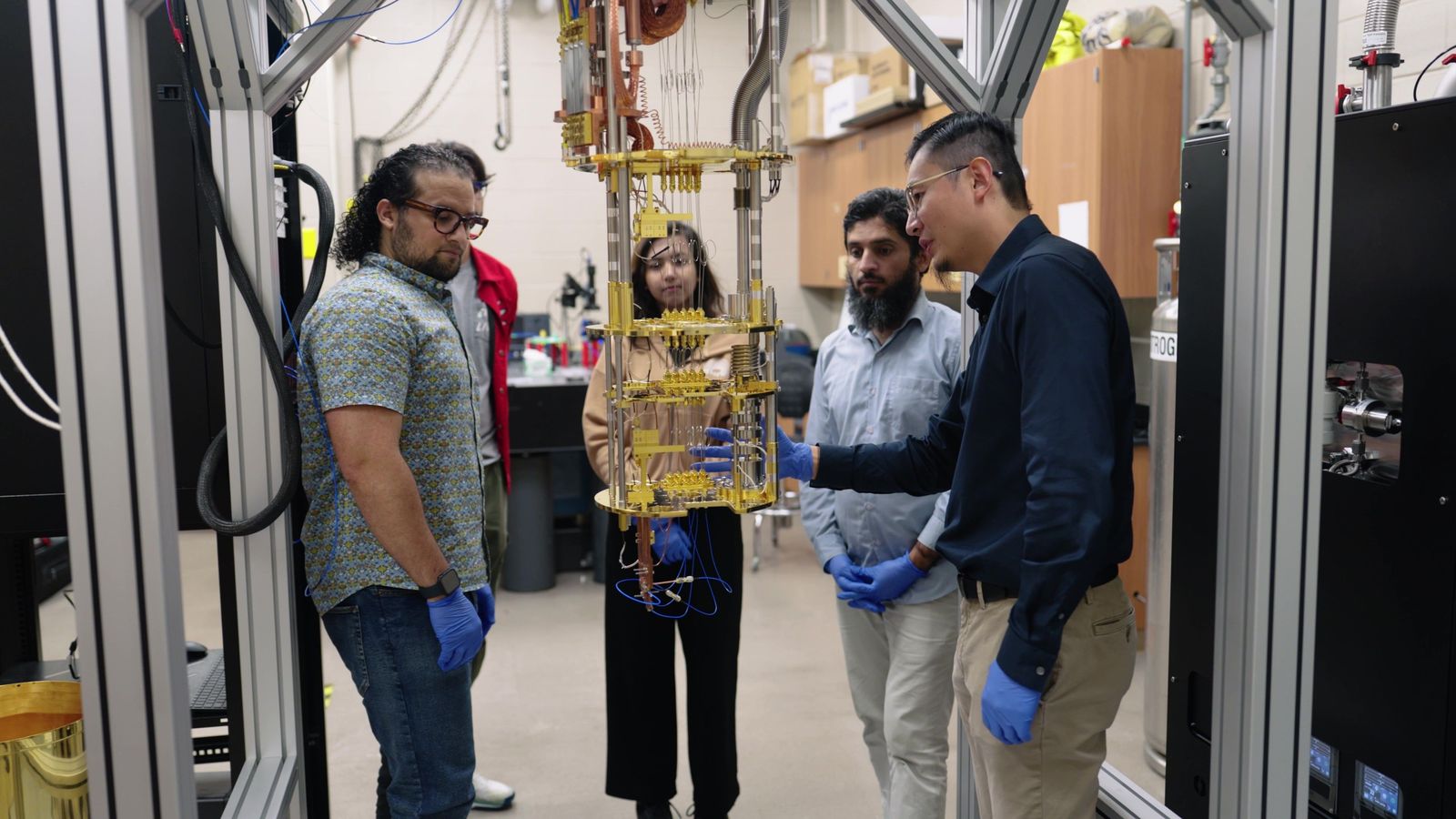
Insider Brief Quantum technology is advancing rapidly, but solving one fundamental challenge could speed up development even further: getting systems from different modalities to communicate effectively with each other. Assistant Professor Jing Xu’s Experimental Quantum magnetics Laboratory (EQMag Lab) at the University of Central Florida focuses on quantum magnonics, specifically how magnetic excitations – known […]