Curator's Take
AI Commentary
This article shows a concrete step toward securing real‑world networks by marrying quantum key distribution with post‑quantum algorithms in a single TLS proxy that can sit behind existing enterprise software. By proving multi‑vendor interoperability, NEC and IBM Japan address one of the biggest hurdles for adoption—retrofit without costly rewrites—while demonstrating a path that financial services and data centers can follow today. The hybrid approach also hedges against the uncertainty of which quantum‑resistant scheme will ultimately dominate, offering immediate protection now and future‑proofing as standards evolve. However, scaling the hardware‑intensive QKD links beyond pilot sites will still require significant infrastructure investment.
— Mark Eatherly
Summary
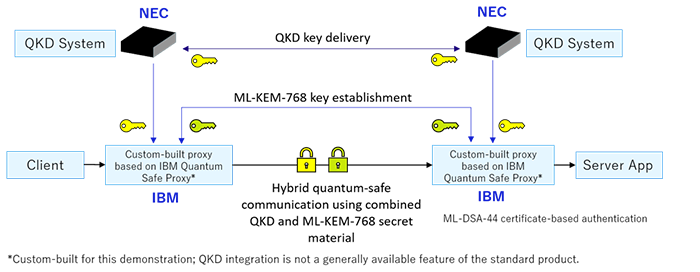
NEC Corporation and IBM Japan successfully demonstrated a hybrid quantum key distribution (QKD) and post-quantum cryptography (PQC) TLS proxy architecture. This trial, conducted between July and September 2026, integrated NEC's QKD hardware with IBM Quantum Safe Proxy, allowing for multi-vendor cryptographic interoperability without modifying existing enterprise applications. The setup combines QKD and PQC for enhanced session security, with future plans for commercial deployment in financial institutions and data centers. The post NEC and IBM Japan Demonstrate Hybrid QKD and Post-Quantum Cryptography TLS Proxy Architecture appeared first on Quantum Computing Report .