Curator's Take
AI Commentary
This article marks the first time a national supercomputer has been tightly coupled with a NISQ‑era quantum processor, showing that high‑performance classical resources can orchestrate and accelerate QAOA workloads in real‑time. By tackling an electrical power‑flow problem—a classic testbed for combinatorial optimization—the Delft team demonstrates a concrete use case where hybrid HPC‑quantum pipelines could outperform pure classical solvers as qubit counts and error rates improve. The work builds on recent co‑design efforts at IBM, Google and Rigetti, but its significance lies in proving that existing HPC infrastructure can be repurposed today to explore quantum advantage pathways, even though the current processor’s limited size still caps scalability.
— Mark Eatherly
Summary
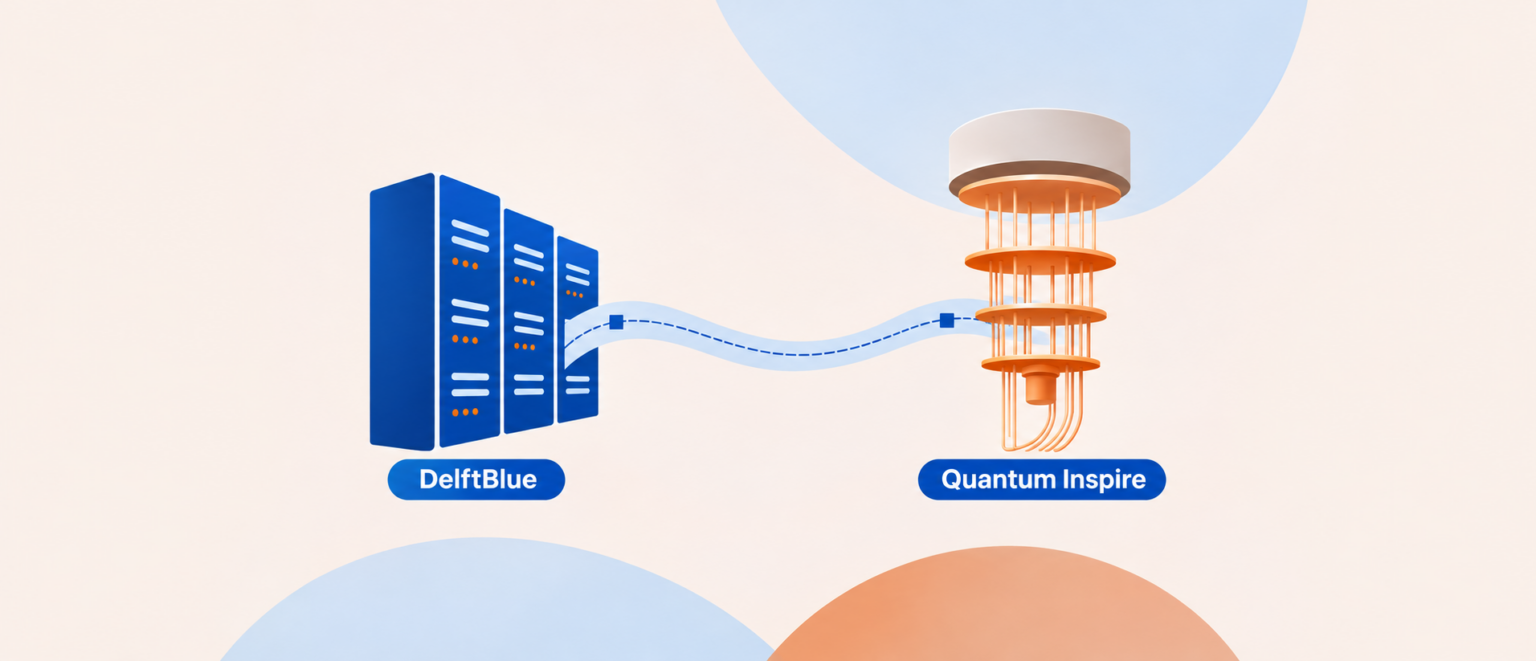
TU Delft and QuTech have successfully linked the DelftBlue supercomputer with QuTech's Tuna-17 quantum processor, demonstrating the first hybrid HPC-quantum workflow. This integration was tested with an electrical power-flow calculation, utilizing the Quantum Approximate Optimization Algorithm (QAOA) to optimize circuit parameters and process quantum circuits. The post TU Delft Demonstrates First Hybrid HPC-Quantum Workflow Linking DelftBlue Supercomputer and Tuna-17 Processor appeared first on Quantum Computing Report .