Curator's Take
AI Commentary
This article shows that engineered phonons—tiny mechanical vibrations—can act as both a shield and a conduit for quantum states, delivering a three‑fold boost in coherence for diamond nitrogen‑vacancy qubits. By demonstrating continuous acoustic dressing on a solid‑state platform, the work bridges recent efforts to use surface acoustic wave resonators for quantum transduction with long‑standing challenges of decoherence mitigation. If scalable, phonon‑based protection and routing could enable densely integrated, chip‑scale quantum networks that sidestep bulky optical or microwave interconnects, though further engineering will be needed to preserve fidelity across larger arrays.
— Mark Eatherly
Summary
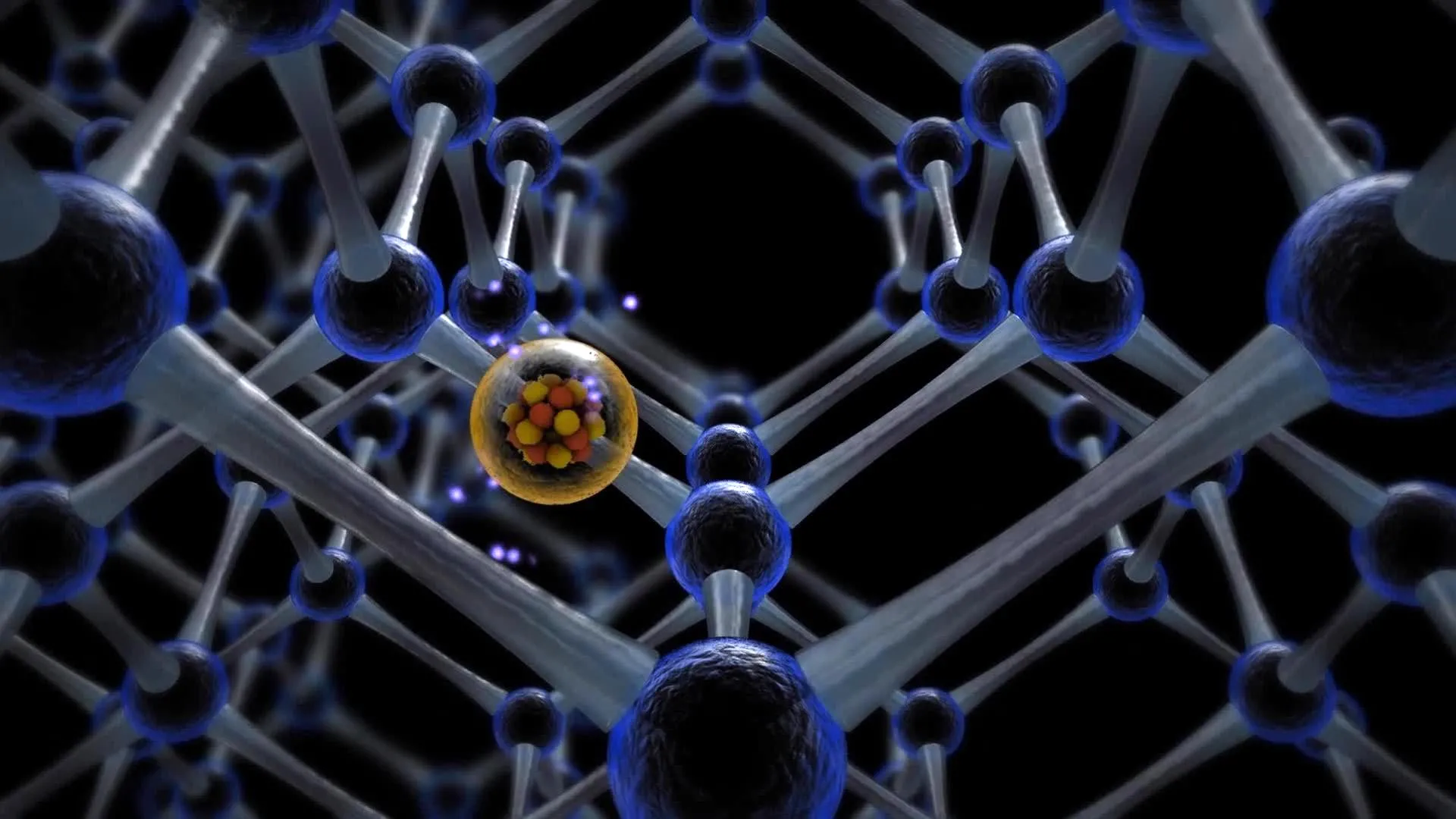
Researchers at Harvard have demonstrated a way to protect quantum information using microscopic sound waves. By continuously surrounding a diamond-based qubit with mechanical vibrations, they extended its coherence time by roughly threefold. The same phonons could eventually both transmit and protect quantum information, opening the door to compact sound-based quantum networks on chips.