Curator's Take
AI Commentary
This article matters because it tackles one of the most pressing engineering hurdles for large‑scale quantum processors: the massive wiring and control overhead that currently limits spin‑qubit arrays. By co‑integrating semiconductor spin qubits with cryogenic CMOS control circuits, the UniQ project promises to bring signal routing on‑chip, dramatically simplifying interconnects and boosting connectivity—an approach echoed in recent IBM and Intel efforts to embed classical electronics at millikelvin temperatures. If successful, the technology could accelerate the transition from few‑qubit demos to fault‑tolerant spin‑based quantum computers, though scaling the cryo‑CMOS fabrication flow and maintaining qubit coherence will remain critical challenges.
— Mark Eatherly
Summary
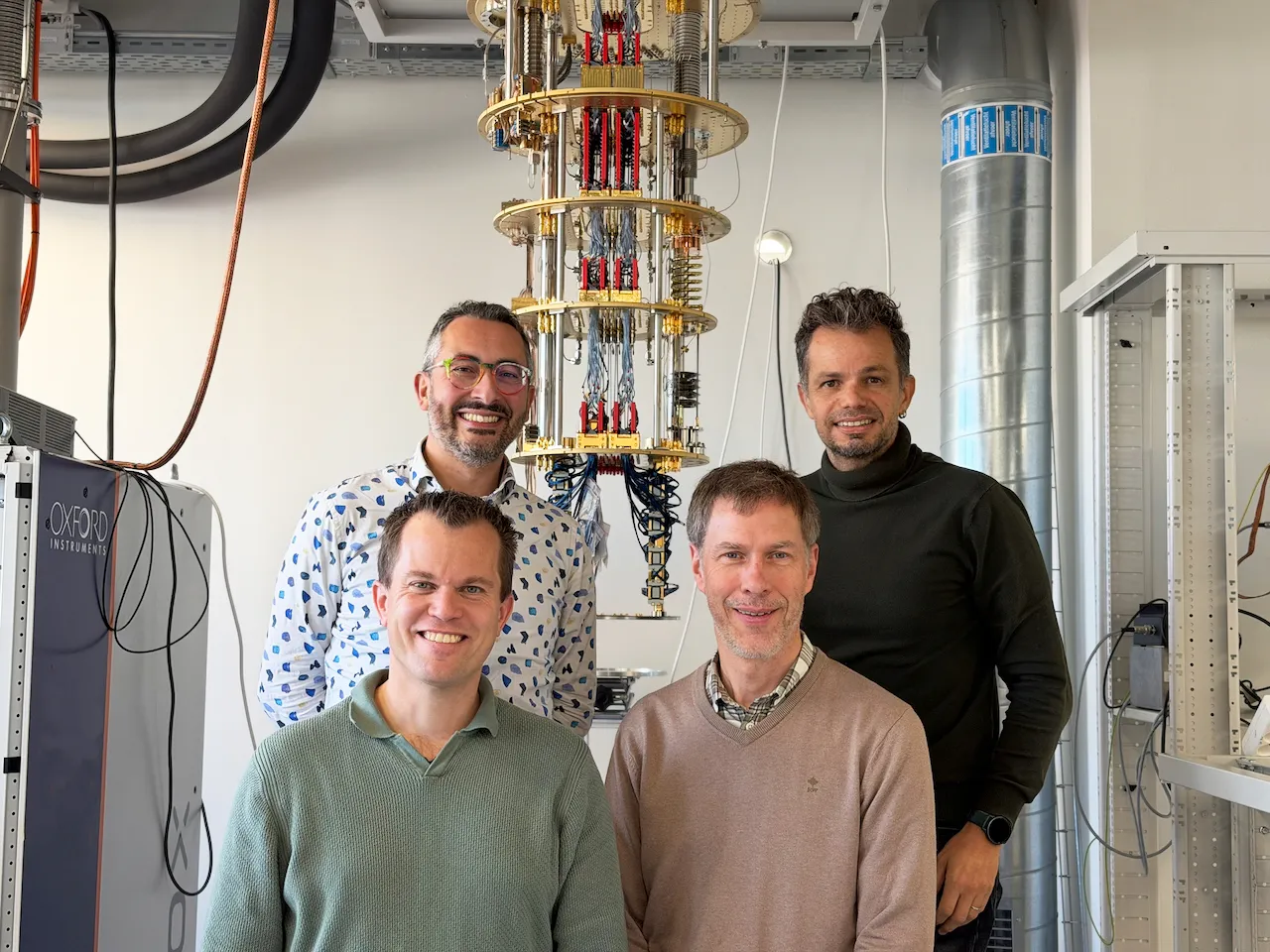
QuTech and TU Delft researchers received a six-year ERC Synergy Grant for their UniQ project to scale semiconductor spin-qubit processors. The project aims to overcome wiring and control bottlenecks by co-integrating spin qubits and cryo-CMOS electronics, enabling simplified control and increased qubit connectivity. The post QuTech and TU Delft Researchers Awarded ERC Synergy Grant to Co-Integrate Spin Qubits and Cryo-CMOS Electronics appeared first on Quantum Computing Report .